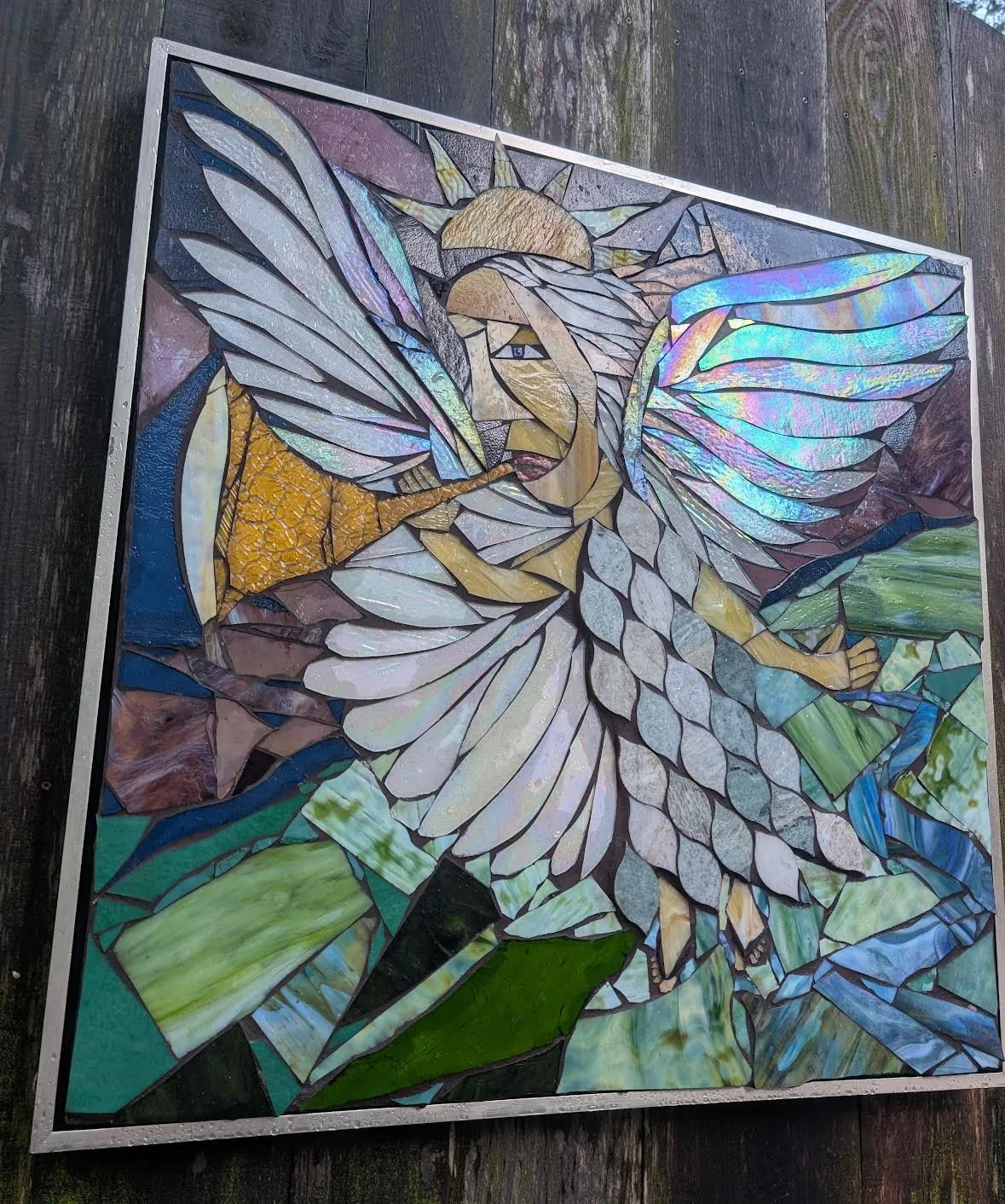
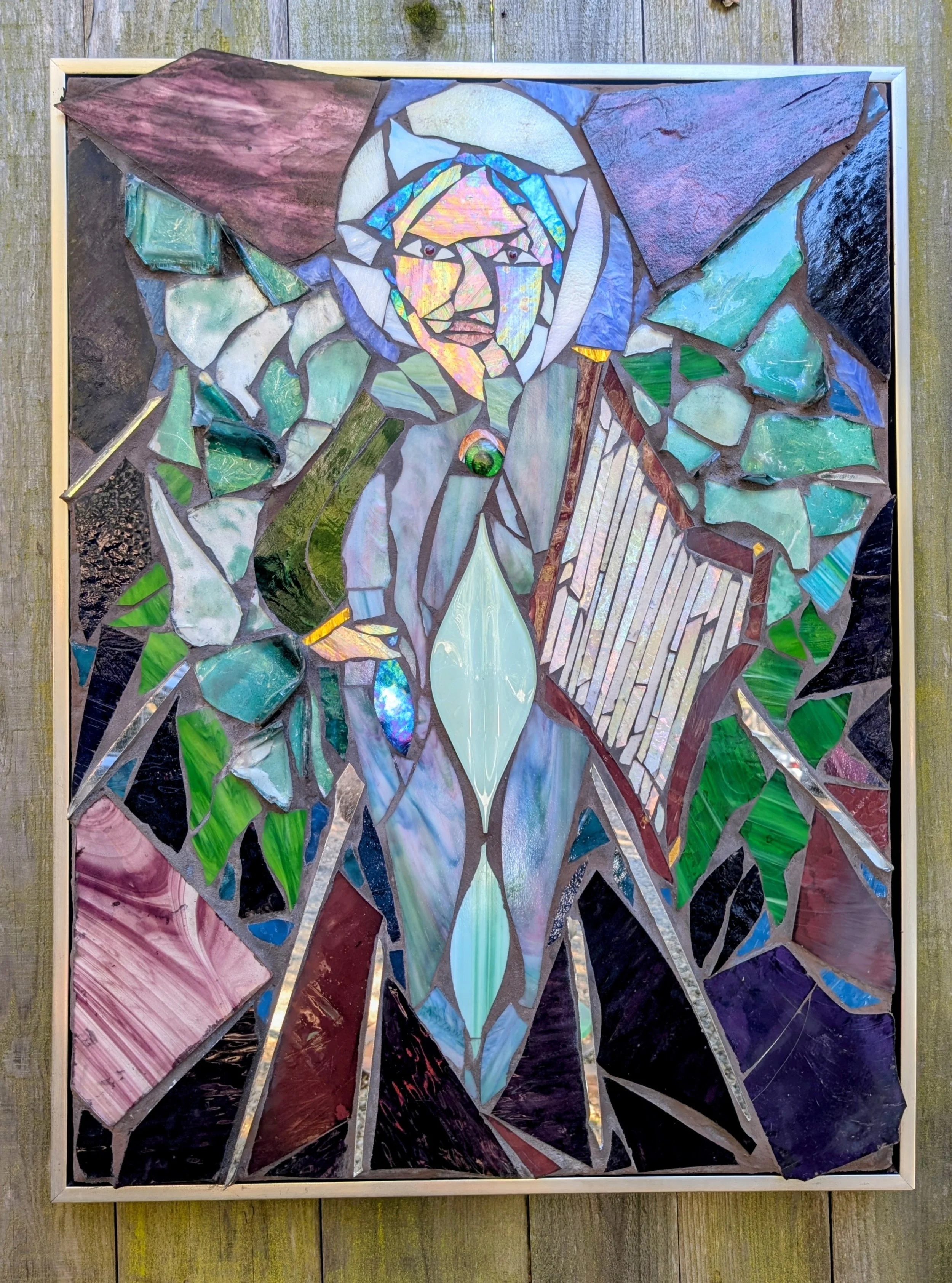
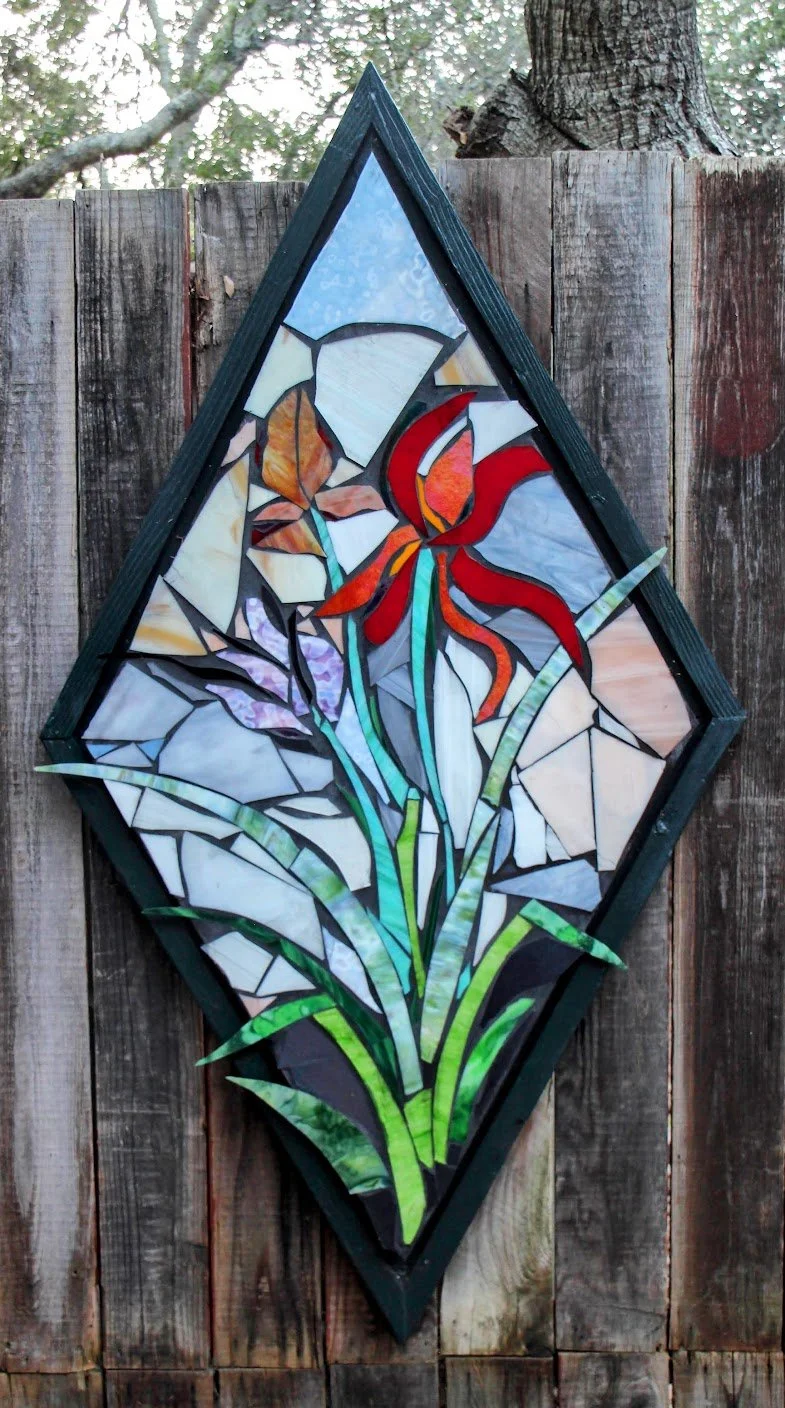
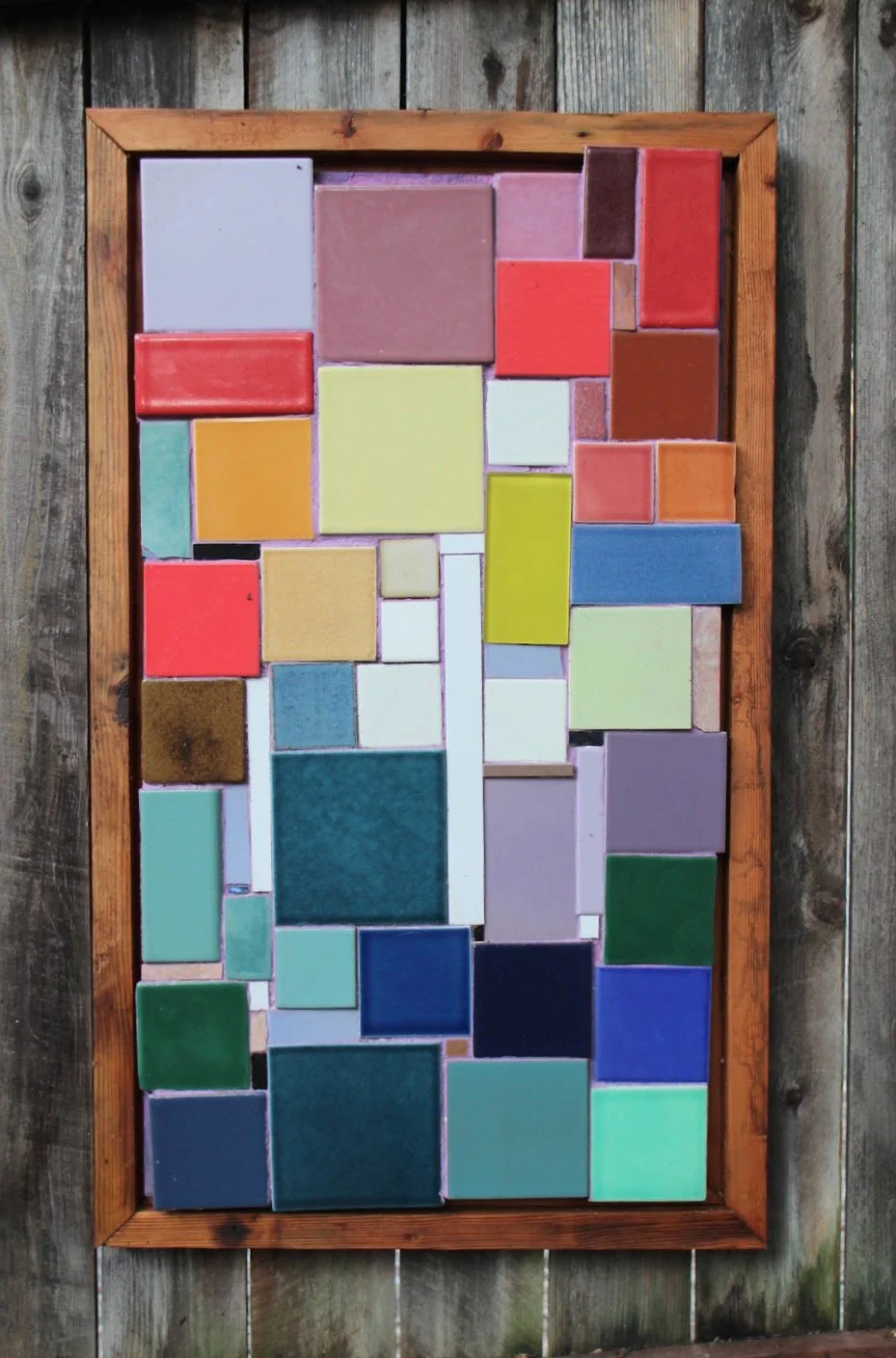
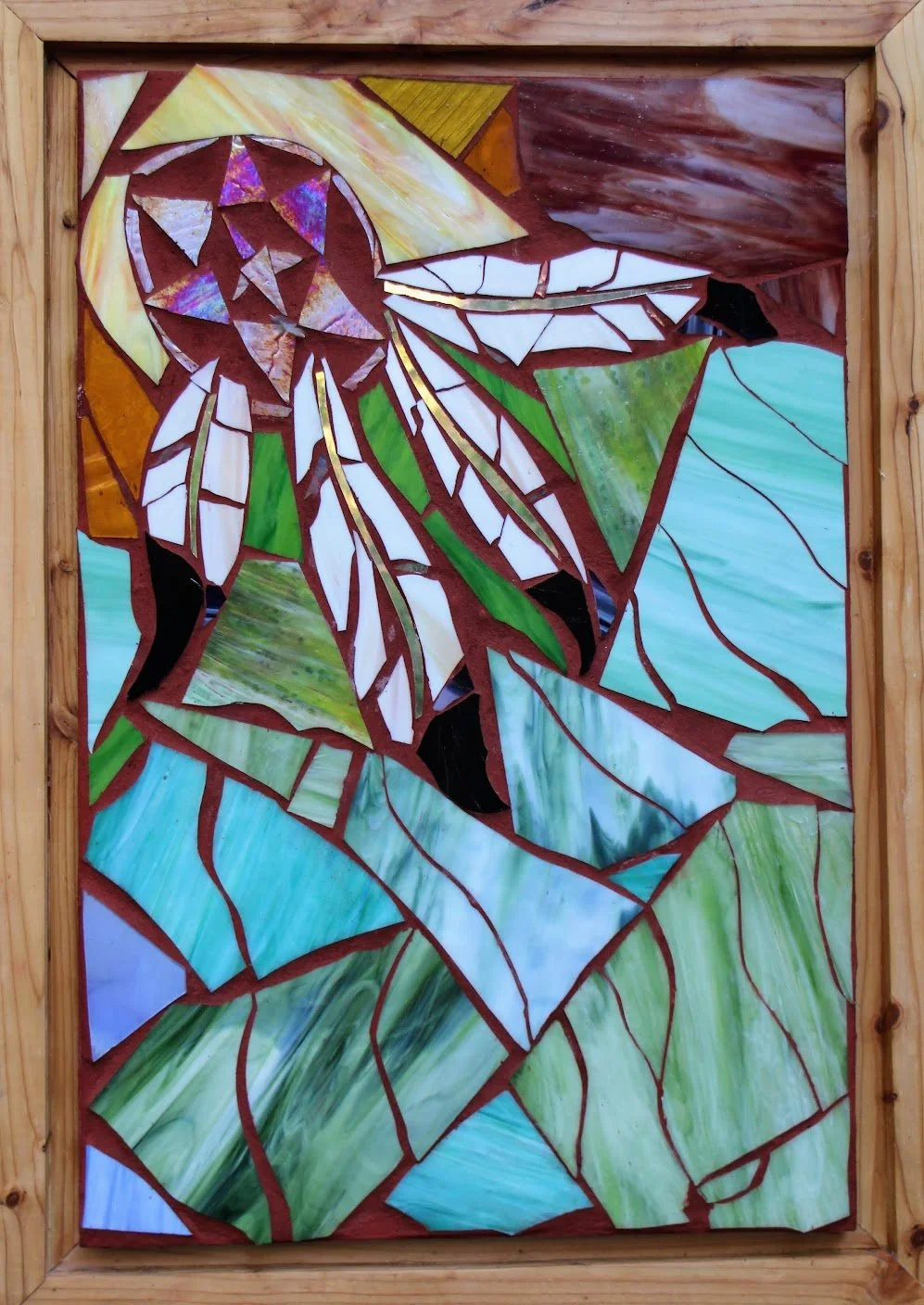
I create mosaics because it feels like one of the most honest ways I can participate in the beauty unfolding around us. Working with glass, stone, mirror, and color slows me down and brings me back to a quieter part of myself — a place where attention becomes devotion, and devotion becomes art. There is something grounding and almost ancient about cutting a single shard, placing it, listening for what the piece wants next, and watching a pattern gradually reveal itself.
I’ve come to see this practice as a small contribution to a larger shift in consciousness — not a dramatic revolution, but a gentle rise, like the way dawn light gradually lifts across a landscape. When I’m in the studio, it often feels less like I’m “creating” and more like I’m uncovering something that was already there, waiting. The materials guide me as much as I guide them. At times it feels as though the natural world is offering me its geometry; at other moments it feels like something unseen — call it intuition, guidance, angels, or simply a deeper intelligence — is shaping the flow.
My work comes from a humble place. I’m not trying to prove anything or posture as anything more than a person who loves their craft. Most days I’m simply grateful: grateful for the light moving across the studio floor, for the sound of glass being cut, for the quiet joy of building something piece by piece. That rhythm keeps me human. It keeps me present. It reminds me that creation doesn’t need to be forceful to be powerful.
I’ve realized over time that mosaics are more than objects. They’re invitations. They ask viewers to slow down, breathe, and reconnect with the part of themselves that notices beauty instinctively. The pieces hold the energy of their making — patience, clarity, wonder — and offer it outward. If someone feels calmer, lighter, or more grounded because of a work I made, then I feel I’ve done something meaningful.
I don’t know exactly where these pieces will end up years from now. Some will live in private homes, some will travel, and some may eventually find their way into museums or future collections long after my lifetime. That idea doesn’t inflate me; it simply makes me hopeful. If something created with sincerity and care can continue to touch people far into the future, then the work has a life of its own.
Ultimately, my practice is about presence and possibility — about honoring materials, listening closely, and allowing beauty to unfold one small piece at a time. If we really are entering a new age of awareness and connection, I believe it will be built not through grand declarations but through countless quiet acts of creation like this: humble, joyful, free, and quietly radiant.
-
![Stained glass artwork of a fairy with butterfly wings resting on a leaf, with a flower in her mouth, surrounded by green leaves and foliage.]()
Dream it.
-
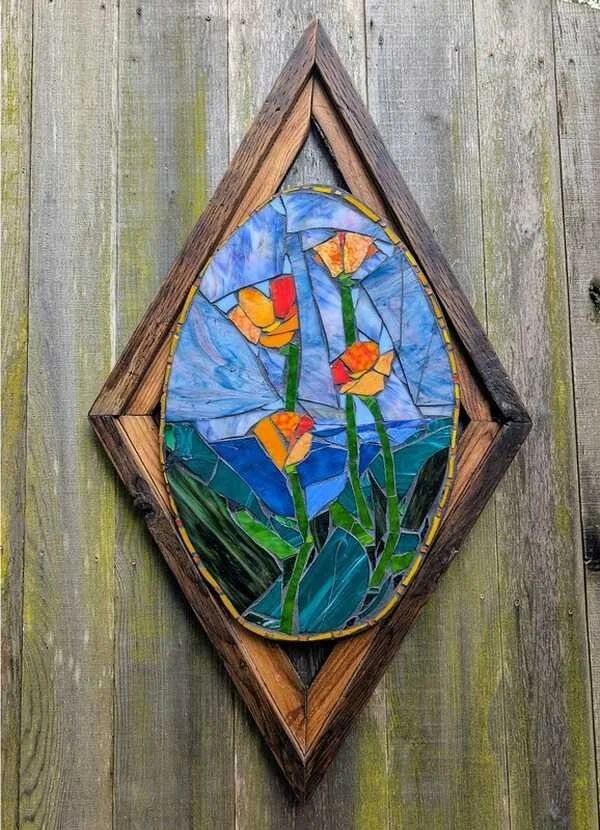
![A stained glass art piece depicting orange and yellow flowers with green stems and leaves, framed by a rustic wooden diamond-shaped frame, mounted on a weathered wooden fence.]()
Build it.
-
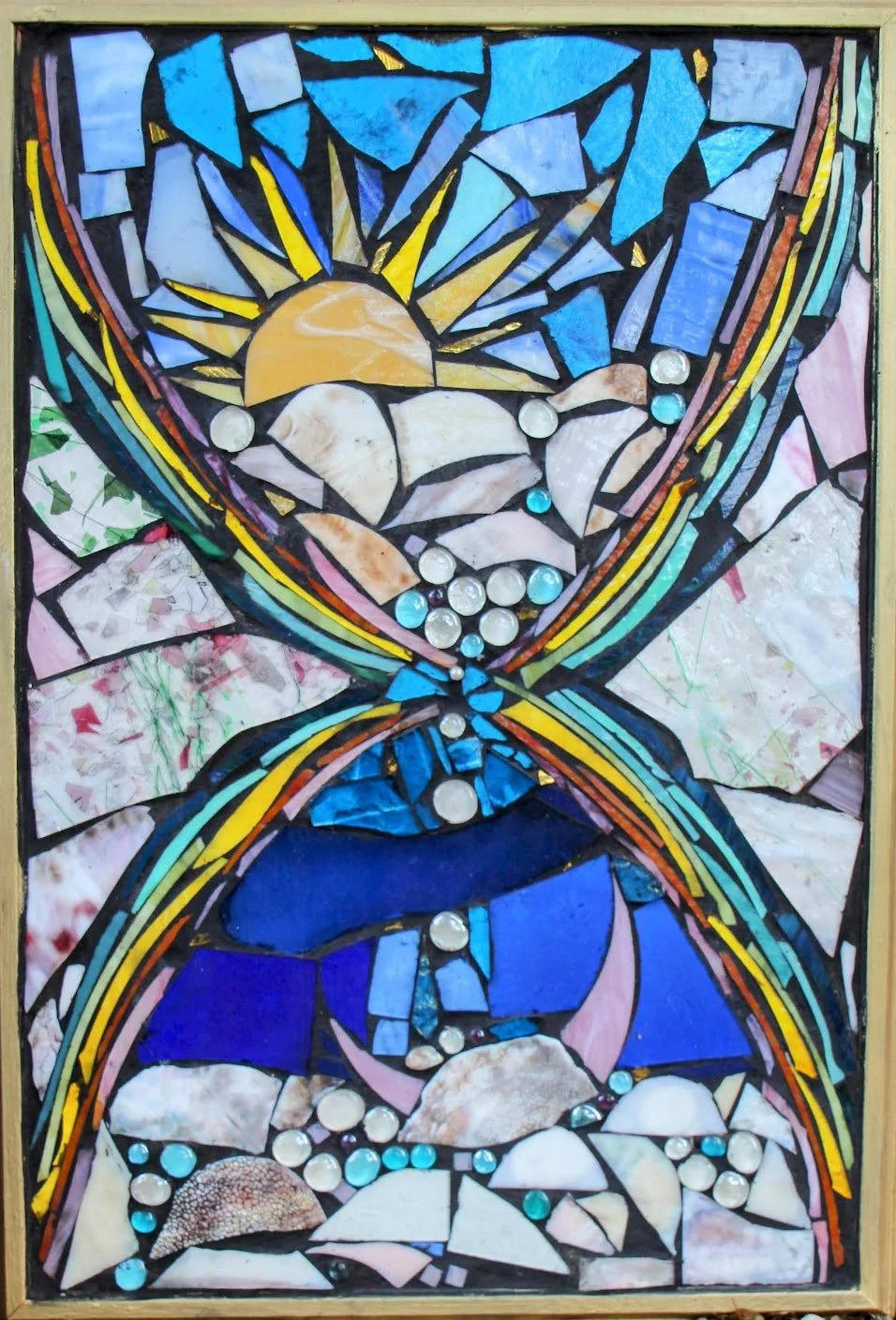
![Stained glass wall art depicting a sunset with an abstract rainbow, rolling hills, and a collection of glass stones.]()
Grow it.
-
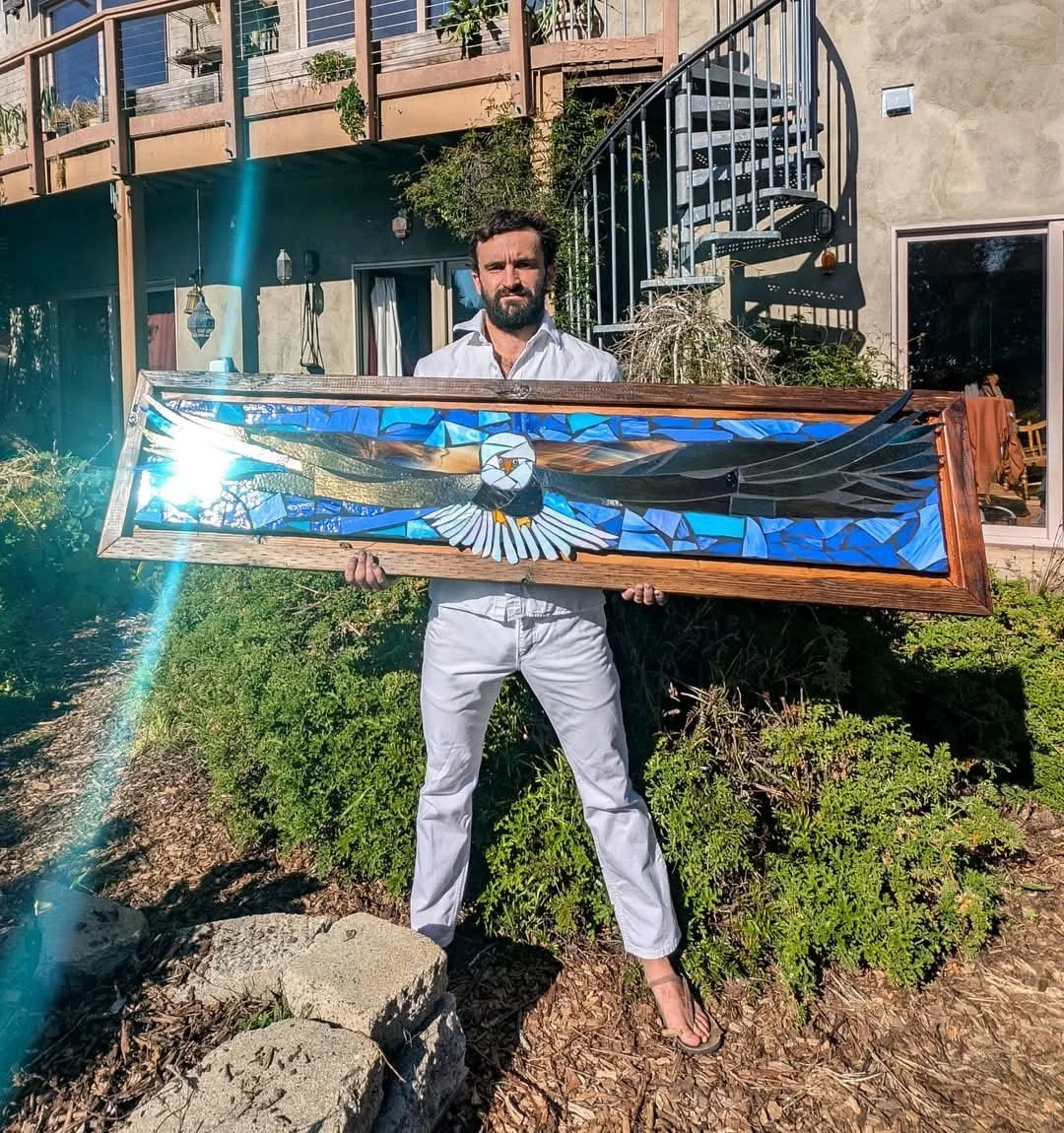
![A man with a beard and white shirt holding a large stained glass artwork of a bird in flight outdoors in front of a house with a spiral staircase and greenery.]()
Sell it.